Broken Vessels
If you’ve spent any time in church, you’re likely familiar with Gideon’s victory over the Midianites. It is one of Scripture’s clearest reminders that God does not need overwhelming numbers to accomplish overwhelming victories.

Judges 7:2
And the Lord said unto Gideon, The people that are with thee are too many for me to give the Midianites into their hands, lest Israel vaunt themselves against me, saying, Mine own hand hath saved me.
Gideon began with thousands of men—yet they were still vastly outnumbered. From a human standpoint, the situation already seemed impossible. Then the Lord said something unexpected: “The people that are with thee are too many” (Judges 7:2). God reduced the army again and again until only three hundred men remained.
Imagine standing in Gideon’s place. You gather soldiers for battle, already feeling the pressure of impossible odds, and then God says your army is too large. Our natural reaction would be, “Lord, we need more help, not less.” But God was not concerned with fairness in numbers. He was concerned with glory. He said, “Lest Israel vaunt themselves against me, saying, Mine own hand hath saved me” (Judges 7:2).
Whenever the odds feel stacked against you, remember this truth: it is never a fair fight when God is on your side. Victory is not determined by majority—but by sovereignty.
But today, let’s look beyond the numbers and consider something smaller in the story—the pitchers.
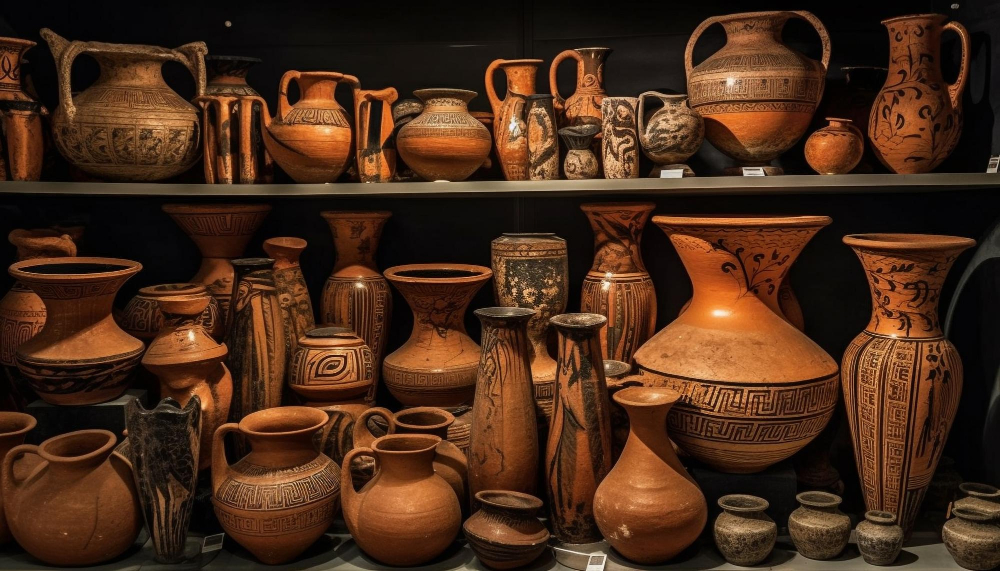
Each of the three hundred men carried a trumpet, a lamp, and an empty pitcher. In almost any other setting, a clay pitcher would seem useless in battle. It was not a sword. It was not a shield. It was not a weapon at all.
A vessel has little value on its own. Its usefulness is determined not by its shape or strength, but by what it holds. An empty pitcher accomplishes nothing. Its worth is found in its contents.
So it is with us.
We are, in ourselves, nothing more than vessels. Paul later wrote in 2 Corinthians 4:7, “But we have this treasure in earthen vessels, that the excellency of the power may be of God, and not of us.” The value is not in the clay—it is in the treasure within.
Gideon’s men placed lamps inside their pitchers. The light was there, but it was hidden. As long as the pitcher remained whole, the light could not shine outward. At the appointed moment, they broke the pitchers—and the light burst forth into the darkness.
The pitcher’s greatest usefulness came in its breaking.
There are seasons in the Christian life when we feel pressed, cracked, and even shattered. Yet sometimes the very thing we resist—brokenness—is the very thing God uses to reveal His light through us. Pride, self-reliance, hidden sin, fear—these are layers of clay that can hinder the Light of Christ from shining freely.
When God allows breaking in our lives, it is not to discard us—but to display Christ through us.
On our own, we are fragile and ordinary. But when filled with Christ, and yielded to His hand, we become instruments through which His glory shines into a dark world. The Potter shapes us, cleanses us, and yes—at times refines us through pressure—so that nothing blocks His light.
The usefulness that night was not in the pitchers. It was in the light inside.
And the power in your life is not in you—it is in the Christ who lives within you.
If you feel cracked today, do not lose heart. It may be that God is allowing the breaking so His Light can shine brighter than ever before.
